
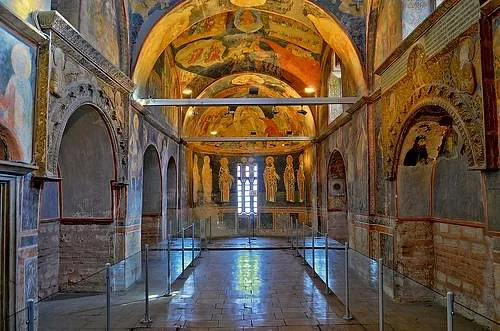
Chora Church (Chora / Kariye) — Fatih
A complete visitor’s guide to one of Istanbul’s most remarkable Byzantine monuments
Chora Church is one of the most brilliant surviving buildings of the Byzantine era. It was originally built as the “Church of the Holy Saviour in Chora”; the Greek word “Chora” means “outside the city walls”.
History and Current Status
The present structure dates from the 11th to 14th centuries, and most of its interior decoration — especially the mosaics and frescoes — was completed in the 14th century by Theodore Metochites, minister to Emperor Andronikos II.
After the Ottoman conquest of Constantinople, the church was converted into a mosque in the early 16th century on the orders of Hadım Ali Pasha. In 1945 it became a museum, and in 2020 Chora was converted back into a mosque; it is now known as the Kariye Mosque.
Architectural and Artistic Features
- Three main sections: narthex, naos and parekklesion
- Number of domes: six
- Byzantine art: brilliant mosaics and frescoes
- Themes: the lives of the Virgin Mary and Jesus
- Famous scene: the Anastasis (Resurrection)
- Restoration: 1948–1959
Mosaics and Frescoes
Chora’s interior is one of the finest examples of Byzantine art. Its walls and ceilings are adorned with radiant mosaics and frescoes depicting the life of the Virgin Mary, the life of Christ, the Resurrection and the Last Judgement.
Among all the images, the Anastasis (Resurrection) scene in the parekklesion is especially famous: Christ breaks open the gates of Hell and raises Adam and Eve from death.
Location
Address: Edirnekapı neighbourhood, Fatih district, Istanbul
Getting there: M2 metro – Edirnekapı station, or by bus
Visiting hours: 9:00–18:00 (daily)