The renowned Ottoman scholar and leading public intellectual died on 13 March at Koç University Hospital in Istanbul after several weeks of health complications.
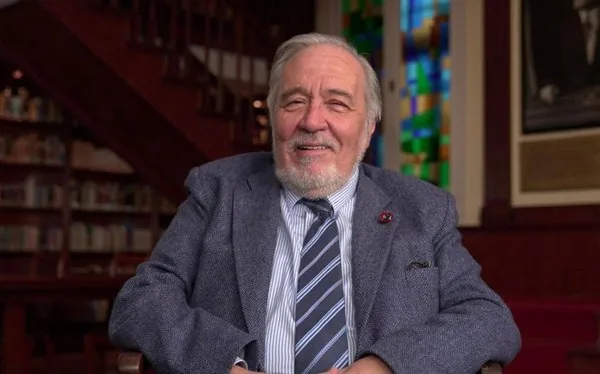
Prof. Dr. İlber Ortaylı, one of Türkiye’s best-known historians and public intellectuals, died on 13 March 2026 while being treated at Koç University Hospital in Istanbul. He was 78.
A life devoted to Ottoman and Turkish history
Ortaylı was born on 21 May 1947 in Bregenz, Austria, and moved to Türkiye with his family at the age of two. He grew up in a multilingual environment — learning German from his father and Russian from his mother — and later mastered more than a dozen languages, including Arabic, Persian, French and Ottoman Turkish. He began his studies at Ankara University’s Faculty of Political Science and went on to graduate studies at the University of Vienna and the University of Chicago, where he studied under the eminent Ottoman historian Halil İnalcık.
His doctoral thesis on local administration during the Ottoman Tanzimat reforms established him as a leading voice in the institutional history of the Ottoman Empire. His best-known work, The Longest Century of the Empire, examines the 19th century as a decisive period of Ottoman transformation.
Bringing history to the public
Beyond academia, Ortaylı became a household name in Türkiye through television appearances, public lectures and best-selling books that made Ottoman and Turkish history accessible to millions.
His sharp wit and readiness to criticise what he called “widespread historical ignorance” earned him a large following and, at times, controversy. From 2005 to 2012 he was director of the Topkapı Palace Museum, one of the most iconic historic sites of the Ottoman Empire. In 2007 he was awarded Russia’s Pushkin Medal for promoting cultural exchange, and he was also elected an honorary member of the Macedonian Academy of Sciences and Arts.