With trade tariffs putting markets under pressure, only a handful of assets and companies have managed to withstand the growing uncertainty caused by the tariffs imposed by US President Donald Trump.
Two standout examples are Bitcoin and chipmaker Nvidia, which showed their resilience this week — one by setting a record price and the other by reaching a market value of more than USD 4 trillion. In a highly volatile market, Bitcoin crossed USD 118,000 for the first time on Friday, a move analysts attributed to the new Trump administration’s friendly policies towards digital assets and stablecoins.
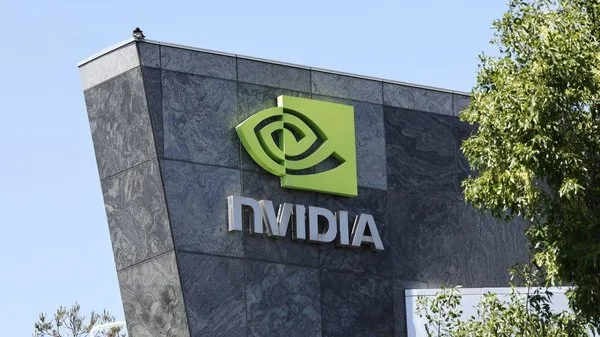
Meanwhile, Nvidia reached a USD 4 trillion valuation on Wednesday, reaffirming its position as the main symbol of the AI boom. These developments came as the global economy faces broad challenges and heavy tariffs that have put many companies, individuals and economies at risk. In this context, the US dollar recorded its worst first half since 1973.
The main driver of Nvidia’s remarkable growth is undoubtedly the spread of AI and companies’ strong demand for its advanced graphics processing units (GPUs), which are seen as vital for data centres, large language models (LLMs) and new software. Just a year ago, in spring 2024, the Santa Clara-based company overtook Saudi Aramco to become the world’s third most valuable company.
Today Nvidia has surpassed even Microsoft and Apple, while Aramco has fallen to seventh place. Nvidia is now worth almost as much as Alphabet (USD 2.19 trillion) and Meta (USD 1.8 trillion) combined. Led by Jensen Huang and trading at around USD 165 per share, it is one of Wall Street’s most popular stocks.
Although the market has faced shocks such as the “DeepSeek” scare, Nvidia’s overall trend has been upward in recent years and investors remain optimistic. Nvidia nevertheless remains at the centre of US–China tech tensions: Washington is restricting exports of its advanced chips to China to secure US leadership in AI.
This week Huang travelled to Beijing, having met Trump beforehand. The agenda of the meeting is unclear, but Bloomberg reports that the Chinese market remains vital for Nvidia. Since 2022 the US has banned exports of Nvidia’s most advanced chips to China, citing concerns over military use.
Earlier this year sales of its H20 AI chip to China were also halted. Despite these restrictions and tariffs, Nvidia increased its revenue in the first quarter, while many other industries such as autos and retail have reported billions in tariff-related losses. Huang calls AI “the next industrial revolution”, and Nvidia’s processors are designed to run AI tasks faster and more efficiently than general-purpose chips such as CPUs.