- An immersive exhibition in Istanbul turns Van Gogh’s iconic works into a multisensory journey of light, sound and emotion.
- Installations include holographic sunflowers, interactive puzzles and digital colouring activities inspired by his paintings.
- “Van Gogh: In Pursuit of Light” reflects a wider cultural shift in Istanbul, where digital technology is redefining how art is displayed, experienced and remembered.
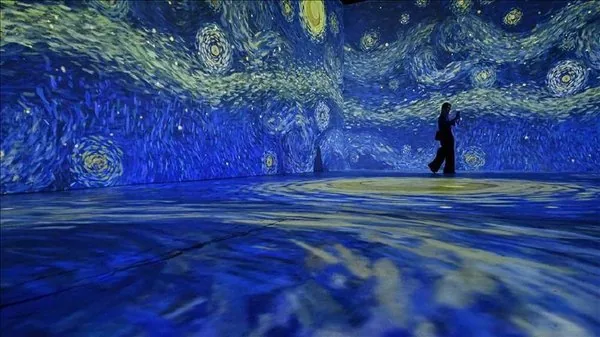
The yellow glow of sunflowers, the deep blue of starry skies and Van Gogh’s restless brushstrokes now surround visitors in Istanbul, inviting them to step into the painter’s world rather than merely look at it.
The large digital exhibition “Van Gogh: In Pursuit of Light”, at the Istanbul Metropolitan Municipality’s Digital Experience Centre, brings the Dutch painter’s world to life with immersive technology, turning his story into a multisensory journey of colour, sound and emotion. Instead of traditional framed canvases, digital spaces full of shifting lights, music and movement carry visitors into the imagination of one of history’s most beloved artists. Born in the Netherlands in 1853, Van Gogh created more than 2,000 works in just over a decade.
Despite suffering from mental illness and poverty, he persevered, and his works — though little recognised in his lifetime — had a profound influence on modern art.
From pigment to pixel
The exhibition begins in the “Digital Room”, where visitors trace Van Gogh’s life through letters, biographical panels and interactive displays. His development as an artist unfolds chronologically, from early drawings and hardships to the brilliant works of his final years.
Sections include holographic sunflowers, interactive puzzles and digital colouring activities inspired by his work. The journey continues with a virtual reality (VR) experience built around the artist’s last colour palette — a gift from his friend Paul Gachet. This immersive experience, designed for the Musée d’Orsay in Paris, is being shown in Türkiye for the first time.
Through the headset, golden fields glow and sunflowers rise up, as if the visitor had stepped straight into Van Gogh’s paintings. Accompanied by Franz Liszt’s piano transcriptions of Wagner operas — the artist’s favourite music — the experience becomes a symphony of colour and sound.
The immersive journey
The exhibition’s centrepiece, “Van Gogh: An Immersive Journey”, is a 15-minute experience projected onto giant digital screens. Visitors are guided through four parts: 1. the artist’s inner world; 2. his search for light in the south of France; 3. his stay at the Saint-Rémy asylum, where he painted the views from his window while under psychiatric care; 4. a final section in which artificial intelligence analyses more than 2,000 of his works and generates new digital works in his style.
Another highlight is an interactive touch installation in which iconic scenes such as “The Starry Night” and “Wheatfield with Crows” shift from calm to stormy depending on visitors’ interaction, reflecting Van Gogh’s emotional states.
A cultural transformation
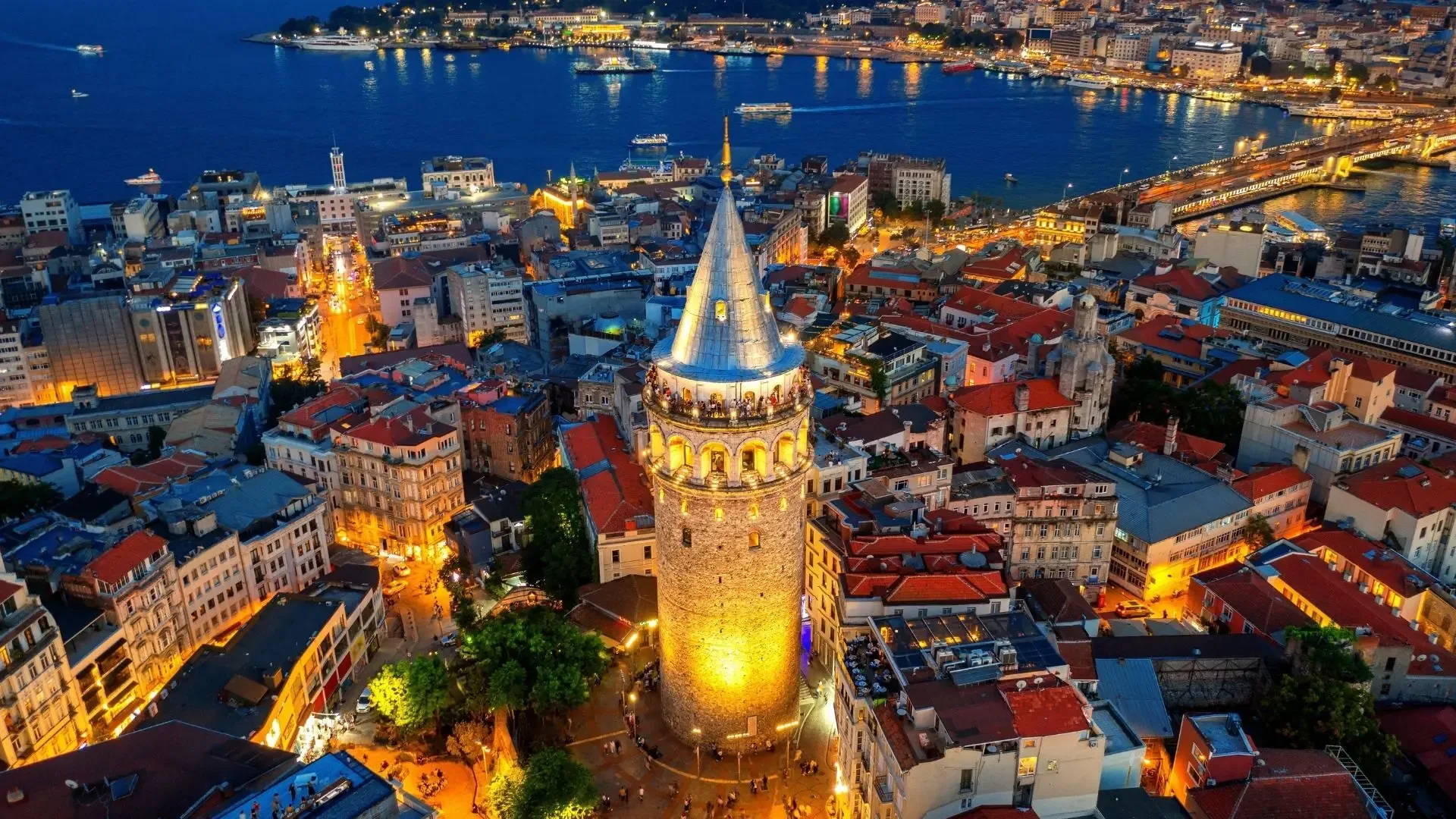
“Van Gogh: In Pursuit of Light” reflects a broader cultural transformation in Istanbul, where digital technology is redefining not only how art is shown but how it is experienced and remembered. The Digital Experience Centre is at the forefront of this change as the first full-scale centre of its kind in Türkiye. Located on the historic Golden Horn, it is quickly becoming a symbol of the city’s evolving identity — a blend of tradition and technological innovation.
In March the centre hosted “From Tradition to the Future: Digital Reflections of Cultural Memory”, a multi-part exhibition that reimagined traditional Turkish arts using AI, VR, AR and interactive projection. Last year it staged “Beyond Time: Nikola Tesla”, a roughly 10-minute VR journey through Tesla’s life, inventions and inner world, starting from the stormy night of his birth.
Feeling rather than imitation
At its heart, the exhibition emphasises Van Gogh’s belief that painting is not about copying reality but expressing feeling. With layered sound, responsive surfaces and dynamic light projections, his emotions are made visible, tangible and interactive. In an 1882 letter to his brother Theo, Van Gogh wrote: “I want to get to the point where people say of my work: that man feels deeply, that man feels tenderly.”