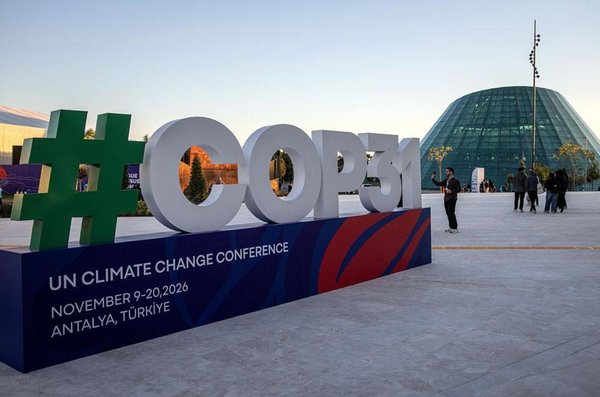
Türkiye, this year’s host of the annual United Nations climate change conference, is urging countries to raise the share of electricity in global energy consumption by 2035. It has also made the transition to clean energy one of the 10 main priorities of its action agenda for the summit.
Raising electricity’s share of global final energy consumption to 35% by 2035, known as “electrification”, is one of the central themes of the UN climate change conference now under way in Antalya.
Negotiators at the two-week conference are trying to persuade governments to sign a pledge to lift electricity’s share of the world economy’s energy use to 35% by 2035, up from roughly one-fifth today.
The five main areas of focus in the programme are:
1. Access to clean cooking: expanding household access to clean cooking technologies and fuels.
2. Power grids, storage and flexibility: strengthening transmission and distribution infrastructure and increasing energy storage capacity.
3. Energy efficiency and sustainable cooling: optimising energy use and developing environmentally friendly cooling technologies.
4. Electrification pathways: extending the use of electricity across economic sectors, including transport, industry and buildings.
5. Transitions suited to national circumstances: designing and implementing energy transition policies based on each country’s capacities, needs and priorities.
Efforts to advance these areas include increasing investment, easing access to finance and strengthening international cooperation.
The approach also supports a fair and realistic transition to clean energy — one that leaves no community behind and takes into account differences in countries’ levels of economic development, energy resources and national priorities.
Analysts and experts attending the conference have also stressed the need for stronger international cooperation to accelerate progress towards electrification targets.
Target: a 35% share for electricity by 2035
The “35-by-35 Global Electrification Pledge” aims to raise electricity’s share of global final energy consumption to 35% by 2035.
According to the International Energy Agency (IEA), electricity currently accounts for about one-fifth of total global final energy consumption.
Taking national circumstances and priorities into account, the programme encourages countries to expand electricity use in transport, industry and buildings. Developing renewable energy and improving energy efficiency are also seen as measures that support this goal.
Expanding transmission and distribution networks, increasing investment in energy storage technologies and making power systems more flexible are also considered essential for wider use of electricity and a secure, reliable supply.
To that end, the “Global Electrification Initiative” has been designed to help implement the pledge.
The initiative focuses on sharing knowledge and experience between countries, monitoring the progress of electrification programmes and supporting investment in power distribution networks.
Target: a twelvefold increase in geothermal energy supply by 2050
Expanding the use of geothermal energy is another goal set out under the clean energy transition agenda.
The “Global Geothermal Ambition 2050” aims to increase geothermal energy supply for electricity and heat to 12 times its 2025 level by 2050.
According to the International Renewable Energy Agency (IRENA), installed geothermal power capacity worldwide reached 15.6 gigawatts last year.