
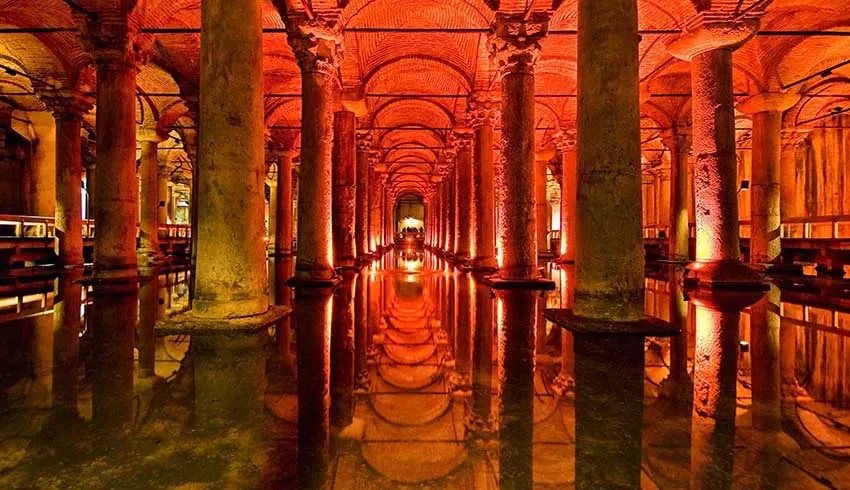
Basilica Cistern — Fatih
A complete visitor’s guide to Istanbul’s underground wonder
The Basilica Cistern, known in Turkish as Yerebatan Sarnıcı, is one of Istanbul’s most unusual and astonishing historic sites, hidden underground near Hagia Sophia.
History and Construction of the Basilica Cistern
This magnificent structure was built in the 6th century on the orders of Emperor Justinian I of the Eastern Roman Empire to supply water to the Great Palace of Constantinople and other central parts of the city.
It is called the “Basilica” because a church of that name once stood on the site; after it was destroyed, a huge cistern was built beneath it.
Architecture and Dimensions
- Columns: 336 marble columns
- Column height: 9 metres
- Length: 140 metres
- Width: 70 metres
- Capacity: more than 80,000 cubic metres of water
- Layout: regular rows of 12 columns
The Medusa Heads and Historical Mysteries
One of the cistern’s most famous features is the pair of Medusa heads used as the bases of two columns, which carry special historical and mythological significance. The exact reason these faces were used is still unknown, but many see them as a symbol of power and protection against evil forces.
The Visit and Its Romantic Atmosphere
Soft orange lighting and the sound of dripping water make the cistern one of Istanbul’s most romantic — and most mysterious — sights. It has even appeared in famous films such as the James Bond classic From Russia with Love.
Location
Address: Yerebatan Street, Alemdar neighbourhood, Fatih district, Istanbul
Getting there: T1 tram – Sultanahmet stop (near Hagia Sophia)
Visiting hours: 9:00–18:30 (daily)