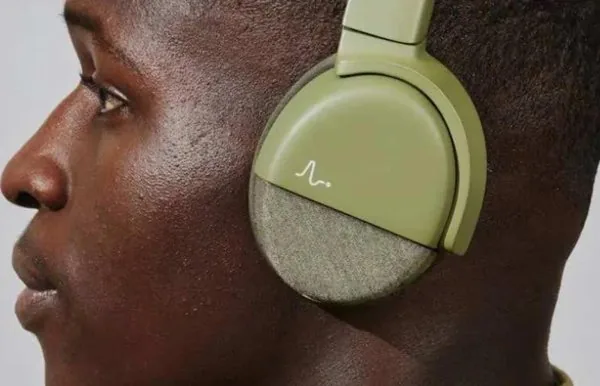
Neurable, a Boston-based neurotechnology company, announced on Thursday that it has raised USD 35 million in a Series A round to accelerate the commercialisation of its consumer-focused brain-computer interface (BCI) platform. The round brings total investment in the company to USD 65 million.
Led by Spectrum Moonshot Fund, the round is an important milestone for non-invasive BCIs — a segment that has gained momentum as venture capital interest in neurotechnology passed USD 1 billion in 2024 and 2025. CEO Dr Ramses Alcaide shared details of the raise exclusively with Axios Pro.
Neurable’s platform integrates brain-signal processing into consumer products such as headphones, providing real-time cognitive insights, including measuring mental fatigue, detecting focus and assessing cognitive recovery. The company recently launched the MW75 Neuro LT headphones, which use EEG sensors embedded in fabric to track brain activity without specialised lab equipment.
“Our mission is to make understanding your brain as natural and intuitive as checking your step count,” Alcaide said in a statement. “This investment allows us to scale Neurable AI across new devices and industries and make cognitive health an everyday tool accessible to everyone.”
Neurable also plans to enter gaming and e-sports, where even small improvements in focus and reaction time can affect competitive performance. The company recently partnered with iMotions, a leading human behaviour research platform, to integrate its headsets for capturing neural data in more natural settings.
A growing market for non-invasive brain technology
The global BCI market is projected to grow from USD 2.40 billion in 2025 to USD 6.16 billion by 2032, driven by advances in AI and wider adoption of non-invasive solutions. According to Coherent Market Insights, non-invasive interfaces are expected to account for about 60.7% of market revenue in 2025.
Mauro Guebeli, investment director at Spectrum Value Management, said: “We invested in Neurable because the team has achieved something remarkable: bringing high-quality BCI technology into a well-designed consumer product powered by excellent signal-processing algorithms.”
Neurable faces competitors pursuing invasive approaches, including Synchron, which raised USD 200 million in November to commercialise its catheter-delivered brain implant, and Neuralink, which has raised USD 650 million for its surgically implanted brain chip.
Spun out of the University of Michigan, Neurable previously raised USD 13 million in May 2024 from Ultratech Capital Partners, TRAC, Pace Ventures and Metaplanet. Existing investors, including Pace Ventures, also took part in the Series A.